VHF Marine Radio
A VHF marine radio is part of your rescue network at sea, alongside other forms of communication like emergency beacons. Your VHF call can be heard by many people at the same time and the distress channel – Channel 16 – is monitored 24/7.
What is a VHF marine radio?
VHF marine radios are a two-way communication device for use at sea.
-
Off the coast, a VHF marine radio is your best two-way means of communication. With a few exceptions, even a portable VHF marine radio can give coverage of up to about 50 kilometres.
-
A VHF marine radio still has a range limit though, subject to “dead spots” in areas with difficult terrain that can block your line of sight to a repeater. While the Maritime Radio Network provides excellent coverage in coastal waters, recreational uses should familiarise themselves with local resources for communications in inland waterways. That is why we recommend taking an emergency beacon with you as well as your VHF marine radio.
-
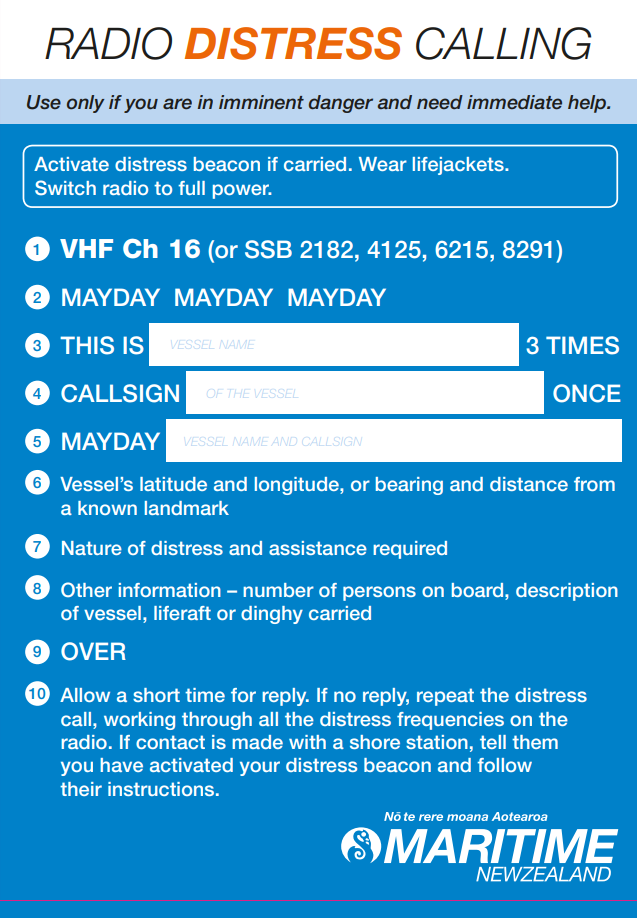
Channel 16 is the international distress channel for VHF. In New Zealand, it is monitored 24/7 by Maritime NZ’s Maritime Operations Centre,
-
On Channel 16, a trained operator will take your emergency call within about a minute and begin coordinating your rescue.
-
With a VHF marine radio, calls can be received by:
-
-
Maritime NZ
-
-
-
Coastguard
-
-
-
nearby vessels that may be able to help immediately.
-
-
A VHF marine radio also helps you receive storm warnings and other urgent marine broadcasts.
Remember to always take at least two forms of communication with you. An emergency beacon is recommended.
Four simple steps to be VHF ready
1. Complete a VHF Marine Radio Operator Certificate course
Knowing how to use a VHF marine radio correctly and with confidence is vital in an emergency.
To operate a VHF marine radio, you must hold a VHF Radio Operator Certificate, unless you are transmitting in an emergency or distress situation.
2. Get the right VHF marine radio
-
Always have a handheld, waterproof VHF marine radio on you, preferably attached to your lifejacket or in your grab bag.
-
A fixed VHF marine radio has greater range and is better for regular communication, but you may not be able to reach it if it is damaged or submerged during a capsize.
-
Carry both a handheld and a fixed VHF marine radio on your vessel if you can.
When looking at buying a VHF marine radio think about the following.
-
Ease of use: choose a radio that is simple and easy to operate.
-
Display visibility: Take the radio outside and check the display in bright conditions.
-
Power: A higher power output measured in watts increases the chance you will be heard.
-
Battery life: Check the expected battery life suits the sort of trips you make.
-
Audio quality: The more milliwatts (mW) the louder the volume, important when you factor in wind, waves and engine noise.
Other features: Some VHF marine radios have extra features including multi-channel scanning and built-in GPS which can provide extra safety.
3. Get a callsign
A callsign for your boat is the best way to ensure each radio transmission is individually identifiable, as there may be another boat with the same name.
Once you have completed your VHF course, you can apply to Coastguard for a callsign for your vessel.
Your callsign is registered on a national search and rescue database. This means search and rescue authorities can access information about your vessel to help locate you faster in an emergency.
To find out more
4. Check coverage and take two waterproof ways to call for help
While the Maritime Radio Network provides excellent coverage in coastal waters, recreational users should familiarise themselves with local resources for communications in inland waterways.
Before you go boating:
-
ask a local skipper or your local Coastguard unit about coverage and any known “no coverage” areas
-
check the VHF coverage map.
If the area where you are boating does not have good VHF coverage, make sure you have:
-
an EPIRB (an emergency beacon for boats), or
-
a waterproof PLB (personal locator beacon), and
-
a cell phone in a waterproof bag.