

Loading logs onto vessels using grapples or grabs
This update is for PCBUs involved in the loading of logs onto vessels using grapples or grabs.
Background
The use of grapples and grabs has seen a reduction in safety issues on ports.
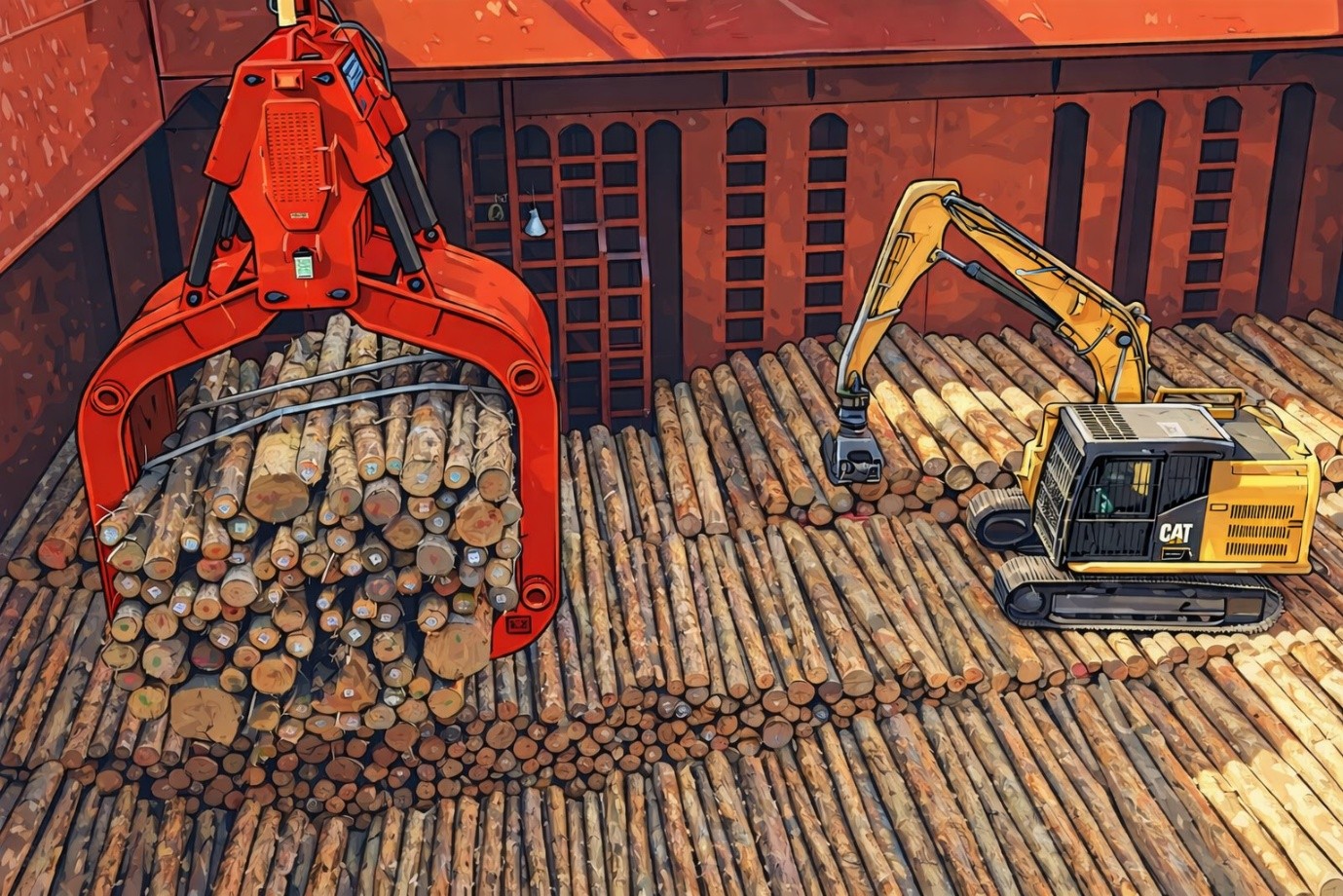
However, there is still a residual risk from falling objects to excavator operators working in the holds of vessels loading logs.
The risk comes from the crane loading logs into the vessel’s hold while the excavator operator is working in the hold. If the grapple, grab or crane wire fails while logs are being loaded over the top of the excavator, the logs might fall on the excavator. An excavator’s falling object protective structure (FOPS) is not rated to withstand the weight of a fully loaded grapple or grab and would not protect the excavator operator from serious harm.
Maritime NZ worked with industry and an independent crane expert to review log loading controls. The findings confirmed that currently PCBUs rely on administrative controls to manage the risk. These include procedures:
-
prohibiting the crane operator from moving the load directly over the excavator
-
setting exclusion zones that prohibit other stevedores and ship's crew from entering the working area
-
requiring the crane operator and excavator operator to be in constant radio communication.
If an operator is using grapples and grabs, effectively implementing the administrative controls and conducting monitoring and evaluation of these, Maritime NZ will consider these to be equivalent to the Approved Code of Practice for loading and unloading cargo at ports and on ships.
However, we have observed that there are times when the loads have passed over the excavator.
Given the reliance on administrative controls, it is critical that these controls are regularly monitored. Regulation 25 of the Health and Safety at Work (General Risk and Workplace Management) Regulations 2016 (GRWM) requires that risks associated with falling objects be managed in line with the hierarchy of control measures, considering the highest level of protection for workers first. GRWM regulation 7 requires PCBUs to ensure control measures remain effective. In practice this means monitoring the use of controls.
We are aware that several PCBUs are trialling:
-
proximity monitoring that will alert crane operators or other persons when a load moves over or near a person or excavator
-
remotely operated excavators.
Safety reminder
Maritime NZ encourages the sector to continue to be vigilant in managing the risk of the grapple or grab coming over the excavator and to ensure it has ongoing reliable ways to monitor the effectiveness of its risk controls.
In particular, the sector should look out for situations where hold sizes and cargo levels can reduce the space available for the excavator, making it harder for the crane operator to avoid moving the load directly overhead. One example is operating in Hold 1 at the bow of the vessel. These situations may require additional oversight.
We would also encourage the sector to continue to look to future robust engineering or technical controls that can more effectively manage this risk of harm.
Ongoing inspections
Maritime NZ will continue to conduct proactive Health and Safety at Work Act inspections. Additionally, as per normal protocols, we will also undertake inspections as relevant to notifications received.
During these inspections we will continue to monitor the effectiveness of risk management systems and the controls that are in place in this area. If issues are identified, then Maritime NZ will use the appropriate corrective and enforcement tools in line with our regulatory approach and corrective and enforcement tools policy.